How Trauma Shapes the Body: A Straightforward Look at Survival Plasticity and Healing

Alt Text: Woman experiencing chronic stress and burnout.
Understanding Why Chronic Pain, Fatigue, and Tension Often Have Roots in the Nervous System
At Stockheart Whole Health, many of our patients come in with chronic pain, fatigue, digestive issues, or burnout. Some have lived with these symptoms for years without answers. Others have tried multiple providers but still feel like their care didn’t address the full picture.
Our very own Dr. Stephen Thompson DC DACM FAIHM has been exploring trauma, burnout, and recovery for over two decades. Recently, he finished writing his first book on the subject called: Journey from the Edge: From Weaponized Survival to Self-Reclaimation. The book, to be released in February, explores how trauma survivors create elaborate masks and armor to navigate daily life. He explores how trauma and burnout change the way the brain and body adapt.
What we often find is a nervous system that has been under sustained stress for a long time, and it tends to express itself in consistent, recognizable patterns. Muscles remain tight even at rest, sleep loses its restorative quality, and gut symptoms often flare in direct response to pressure or demand. These patterns are not evidence that something is broken or failing. They reflect a body that adapted, over time, to survive ongoing stress, constraint, or trauma.
Dr. Stephen refers to this pattern as survival plasticity.
What Is Survival Plasticity?
Neuroplasticity is the ability of the brain and nervous system to change and adapt based on experience. It is how we form habits, recover after injuries, and respond to stress, challenges or trauma. Survival plasticity happens when the nervous system adjusts to keep a person going under difficult or hostile conditions.
In unsafe or high-demand environments, the body and mind learns to stay alert, hold tension, and conserve energy. These adaptations may have been necessary in the past, but over time, they can limit recovery.
We often see:
Shoulder, neck, or low back pain that does not respond to treatment
Migraines that return after stress
Sleep problems, even after making changes to routine
Jaw clenching or bracing in the core or pelvis
Fatigue that doesn’t improve with rest
Gut discomfort that worsens with anxiety
These symptoms are real. They reflect long-term patterns in the nervous system, not just isolated physical problems.
What Is Privilege Plasticity?
Some people live in settings where they feel safe most of the time. Their nervous systems are not trained to stay constantly in survival mode. They have easier access to rest, support, and recovery.
This kind of nervous system pattern is also learned. It shows up as better stress recovery, clearer body signals, and more flexibility when things go wrong.
Most of the patients we serve have lived closer to survival plasticity. That context changes how we approach care.
What We See in the Clinic
We work with people whose symptoms are often misunderstood or minimized. They are told to stretch, rest, or take something for the pain. Some try that and still feel worse. Others give up on care because it never felt safe or effective.
What we often find is a nervous system stuck in patterns that made sense a long time ago. The body stayed ready. The body stayed tight. It kept going because it had to.
We don’t try to override those responses. We work with them.
Our Approach to Trauma-Informed Care
Every patient we see has a unique story. We ask about physical symptoms, but we also consider past stress, medical experiences, cultural identity, and access to support.
We take time to understand what your body has learned. From there, we build a care plan that works with your nervous system, not against it.
This can include:
Breath and Regulation Work
Many people breathe from the chest or hold their breath without realizing it. We offer techniques that support the diaphragm, rib cage, and neck. We also use craniosacral therapy and gentle contact to support the vagus nerve.
Movement Assessment and Bodywork
We look at posture, walking, muscle tension, and how you compensate around pain. Our hands-on bodywork providers use soft tissue therapy, stretching, and movement retraining.
Nutrition and Functional Medicine
We support digestive health, inflammation, and fatigue through targeted nutrition. Functional labs may be included to help identify hidden drivers like gut imbalance or hormone depletion.
Connection and Trust
We build care around consent, comfort, and consistency. We explain every step. We honor your pace. There is no pressure to perform or prove your pain. Our job is to listen and support the body’s process, not to rush it.
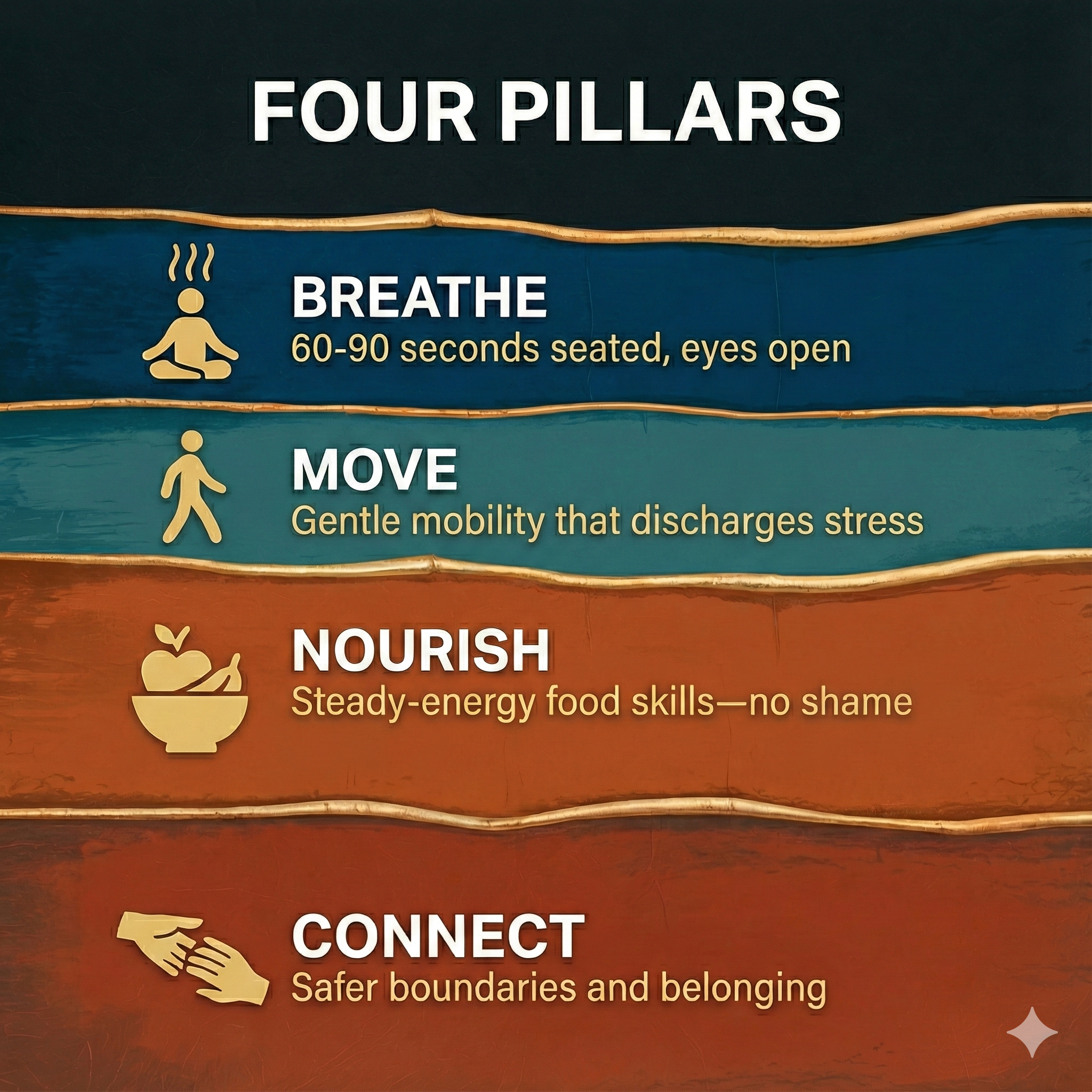
Alt text: Four Pillars of Health: Breathe, Move, Nourish, and Connect
Who This Is For
This approach works well for people who:
Have lived with symptoms longer than three months
Have already tried other providers or therapies
Have been dismissed, rushed, or ignored in medical settings
Carry complex stress, grief, or trauma in the body
Need care that can meet emotional and physical needs at the same time
We welcome individuals from all backgrounds and life experiences. Many of the people we care for have carried pain or stress for a long time without feeling seen or supported. Our approach is built for those who need care that respects complexity, honors identity, and moves at a pace that feels safe. No one is turned away for being “too much” or “too hard to figure out.”
Starting Care
All doctors at Stockheart are licensed Chiropractors and each of us have specialties. Dr. Stephen and Dr. Michele offer a rare mix of Chiropractic, Acupuncture and Chinese Medicine, Bodywork, Functional Medicine, Nutrition therapy, and Dr. Brenna offers DNFT chiropractic, a gentle non-force technique for those who respond best to subtle adjustments, functional medicine, and craniosacral bodywork. We also use tools like the Activator or JTECH system when light structural correction is needed.
We offer discovery visits to help patients understand what we do, ask questions, and decide what care feels right. There is no obligation to continue unless it feels like a good fit.
📍 We serve Minneapolis, Uptown, and surrounding neighborhoods
What Working Together Looks Like
Discovery Session: Testing the Waters
We start with a 20-minute discovery call. This isn't a sales pitch. It's a genuine conversation where we learn about your health challenges and you get to feel whether this approach resonates with you. Many patients have been through so many failed attempts that they need to know there's a real plan before committing. We get it. We'll discuss your symptoms, what you've already tried, and whether functional medicine + integrative whole person care.
Comprehensive 90-Minute Intake: The Deep Dive
If we both agree we're a good fit, your first appointment is where the real work begins:
Complete health history: We map your entire timeline. When did the burnout issues start, what else was happening in your life and body, what's been tried and what helped (even a little)? The patterns matter.
Neurological assessment: I evaluate your nervous system's ability to regulate itself—how your body responds to stress, where you're holding tension, how your cranial-sacral mechanism is functioning.
Orthopedic examination: We assess structural factors that might be contributing to chronic aches and pains, like low back pain, headaches, and arthritis.
First gentle chiropractic treatment: You experience the work immediately. Most patients describe it as deeply relaxing, often feeling their nervous system "drop" into a state they haven't accessed in years.
We discuss testing strategy and create your initial treatment plan before you leave.

Alt text: Woman meditating in nature with happy smile
Choose Your Next Step:
-
Let's have a real conversation about your sleep challenges. No pressure, no sales pitch—just an honest discussion about whether this approach makes sense for you. [Schedule your discovery call]
-
If you already know this resonates and you're ready to dive in, book your intake appointment. We'll do your complete assessment, first gentle treatment, and create your testing strategy in one appointment. [Book your intake]
“Healing requires reactivating the capacity for growth, creativity, and deeper relational connection.”