
Summer & The Heart
Summer is the Season of the Heart in Traditional Chinese Medicine (my favorite)
by Dr. Rowan Renee, DAcChM, MAc, LAc
In traditional Chinese medicine (TCM) every season has certain associations. The seasons instruct us how and when to nourish the body with the support of nature, rather than working against the intuitive motions of the natural world. TCM uses yin and yang to describe these movements. Winter is peak yin, summer is peak yang, and spring and fall are the transitions between them. Because there is abundant yang in summer, many people find it easier to be active and stoke the fire within. A healthy amount of yang energy allows the body to do things like fight disease more effectively, feel wakeful, digest food fully and easily, maintain cardiac health by indulging in physical activity, and regulate our body temperature. Beyond yin and yang, each season connects with an organ and an element.
Since acupuncture and TCM is especially concerned with preventative care, I think it’s important for each person to learn about how to care for themselves before they start feeling unwell.

the Heart in TCM
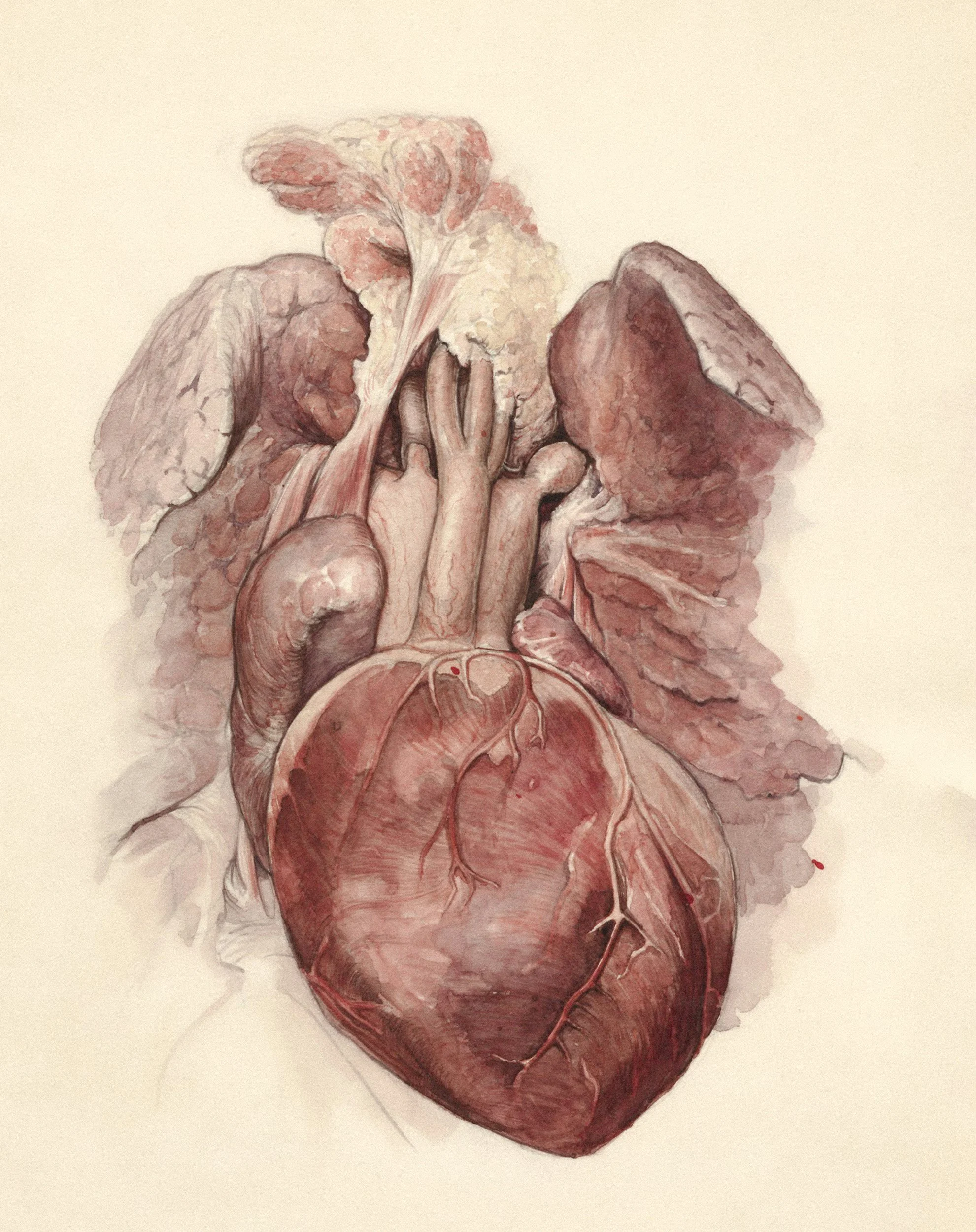
Summertime belongs to the Heart. In TCM, the Heart refers both to the physical organ and the figurative home of the Shen, often translated as spirit, which allows us to make sense of our five senses and calmly navigate our emotional landscape. If our organs were a governing system, the Heart would be the Emperor; its whims can affect every part of our body and our survival depends on its steadiness and clarity. If the Heart is well, our organs can work together and easily find nourishment, since the Heart governs the Blood. If the Heart is depleted or overcome, other organs may try to take over, some even becoming damaged.
The Heart is the seat of all emotions, but it is particularly associated with joy. In TCM, every emotion requires some measure of moderation. Too much of any emotion can damage the heart, causing what we call deficiency or (sometimes) hyperactivity, or fire. Heart pathology often causes emotional symptoms, like tearfulness or mood swings. The more physical tell-tale signs include palpitations or other chest sensations.
Make it stand out
Excessive heat in the heart, whether caused directly by the weather or by the liquid depletion that heat causes, can lead to irritability, insomnia, mania, delerium, and anxiety for some people.
heat and the Heart
The Heart thrives with moderate heat, but can easily be damaged by too much. Excessive heat in the heart, whether caused directly by the weather or by the liquid depletion that heat causes, can lead to irritability, insomnia, mania, delerium, and anxiety for some people. Some other possible effects of heat include palpitations, rashes, and even acne.
These symptoms are not always caused by heat! One of my favorite parts about this medical paradigm is the specificity of each diagnosis. There is no one thing that causes a vague symptom, since no one’s symptoms are the exact same. That being said, I see the hot manifestations of these symptoms pop up more in summer, especially the ones relating to mental health.
summer is a moment for heart-healing
Summer offers us an opportunity to build a relationship with our Heart, listen when we need to cool down, and indulge in joyful movement that sets us up for success for the rest of the year. Healing is an active experience - outside of my treatment room, I hope that my patients find ways to incorporate supportive practices into their everyday lives. For many people, acupuncture is a last resort after other medical approaches have been disappointing, invalidating, or counterproductive, and although acupuncture is effective for treating chronic concerns too, the goal is to get people to a place where their body is able to feel better, longer.
your time and attention are powerful
Take this opportunity to do your body a favor and make this upcoming year a little easier. Here are some options:
Make a list of goals and passions that you want to put more energy towards. Schedule time for yourself to do these things, or make it easier to pick things up when you have spare time throughout each week. If you have some long-term goals, this could be a great time to dream big and discern where you might feel the most joyful.
Adopt a dependable sleep schedule in order to counterbalance all the active yang energy.
Get outside a little bit each day, whether that looks like a long walk, sitting outside your house on a stoop or porch, or calm stretches somewhere outside. Respect your own limitations while still pushing yourself out of your comfort zone just a bit.
Connect with nature by finding a new park or tending a garden.
Eat lots of fresh fruits and lightly steamed vegetables as often as possible. Think about incorporating things like dates, whole wheat (if tolerated), red (adzuki) and black beans, and watermelon. Reduce things like alcohol, freezing-cold daily beverages, and greasy foods. Above all else, make sure you are eating enough. Starvation or restriction is very hard on your Heart, physically and emotionally.
Attend a Qi Gong class - bonus points if it’s outside! (Dr. Stephen offers one at Stockheart every Sunday at 3pm, and to make it even sweeter, it’s donation based!)
Move a little more each week. Find a type of movement that doesn’t feel like a chore.
Keep a journal of your emotional experiences in this especially active time. Identify the moments where you feel the most peacefulness and make an effort to cultivate more of that going forward; activities, relationships, and places that you can experience year-round are particularly good to invest in.
Pick just a few of these things to try - don’t overwhelm yourself with changing your entire routine!
remember…
The most powerful way to nourish your Heart is with loving-kindness. Gentleness, moderation, and patience can nourish you year-round.